
S/R Collaborative Project with Annie Rüfenacht
Brief History
I was first introduced to motorised moving loudspeakers when Annie Rüfenacht performed at BEAST Feast 2025. The BEAST system itself consists of over 80+ loudspeakers. Annie was working with precomposed quad arrangement of ICST built ‘Aggregate Loudspeakers’. Over this Annie improvised with her Eurorack Modular to a fixed quad of PA speakers which was a part of the BEAST system. This was a comparatively sparse set up but it more than filled the hall.
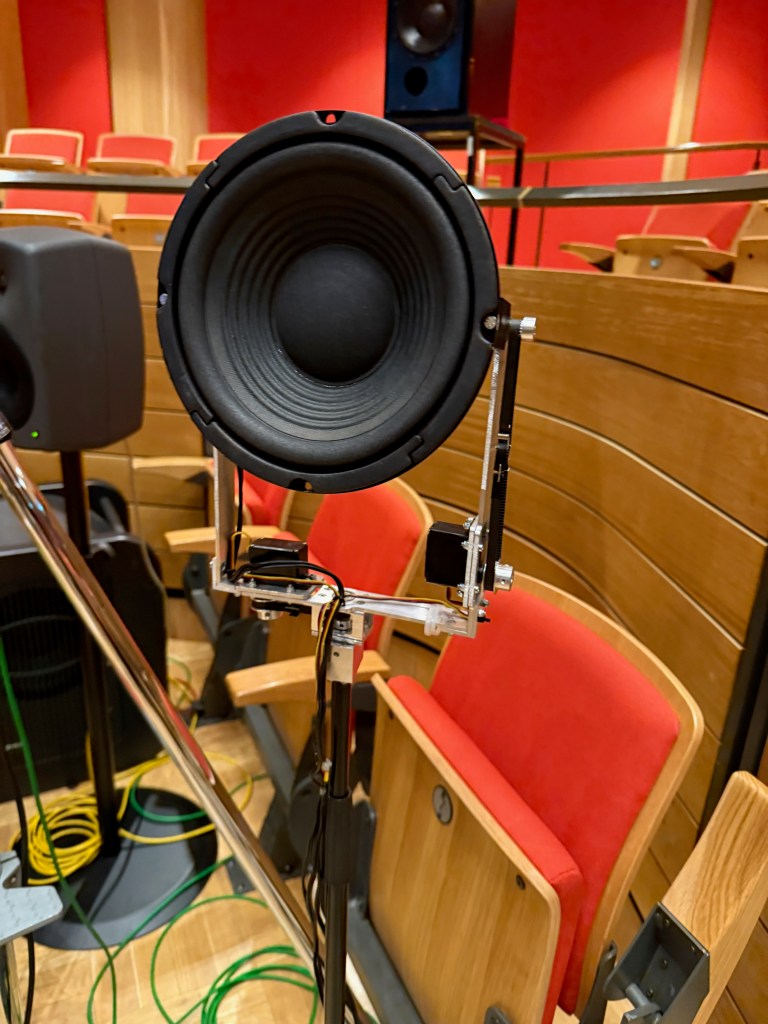
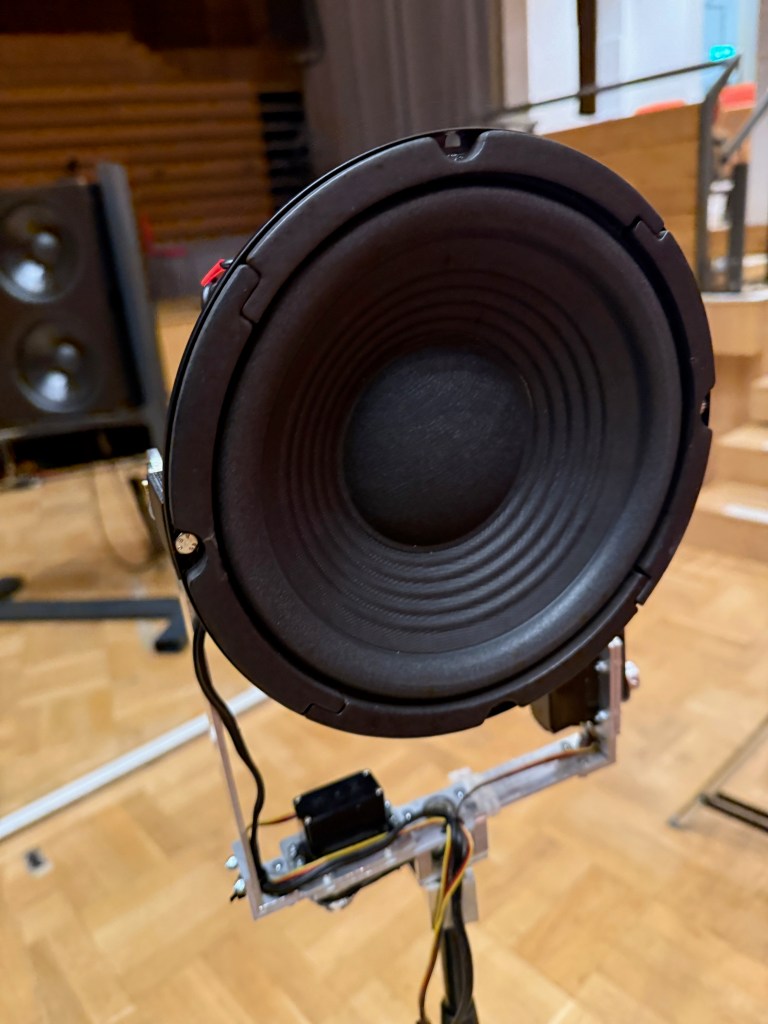
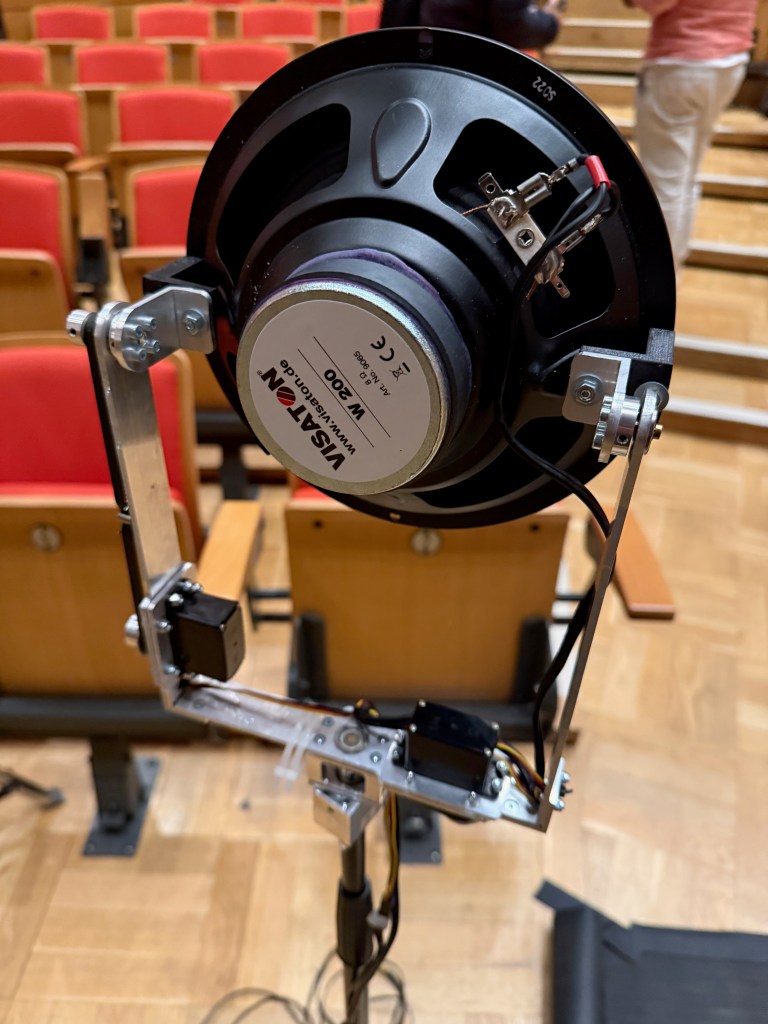
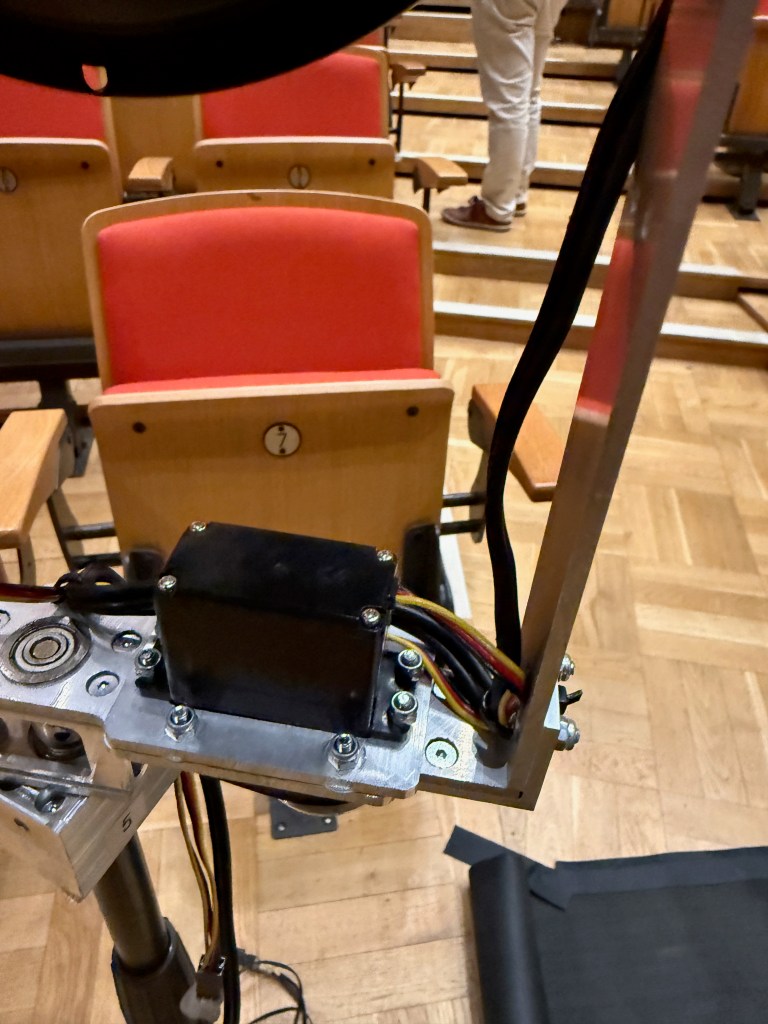
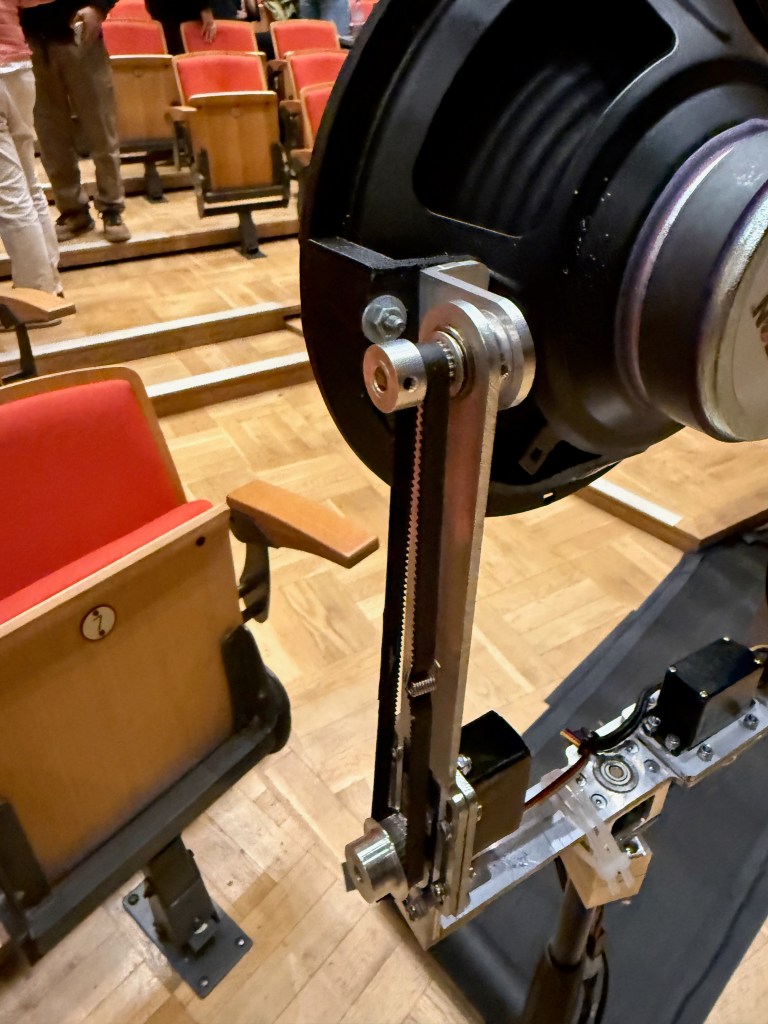
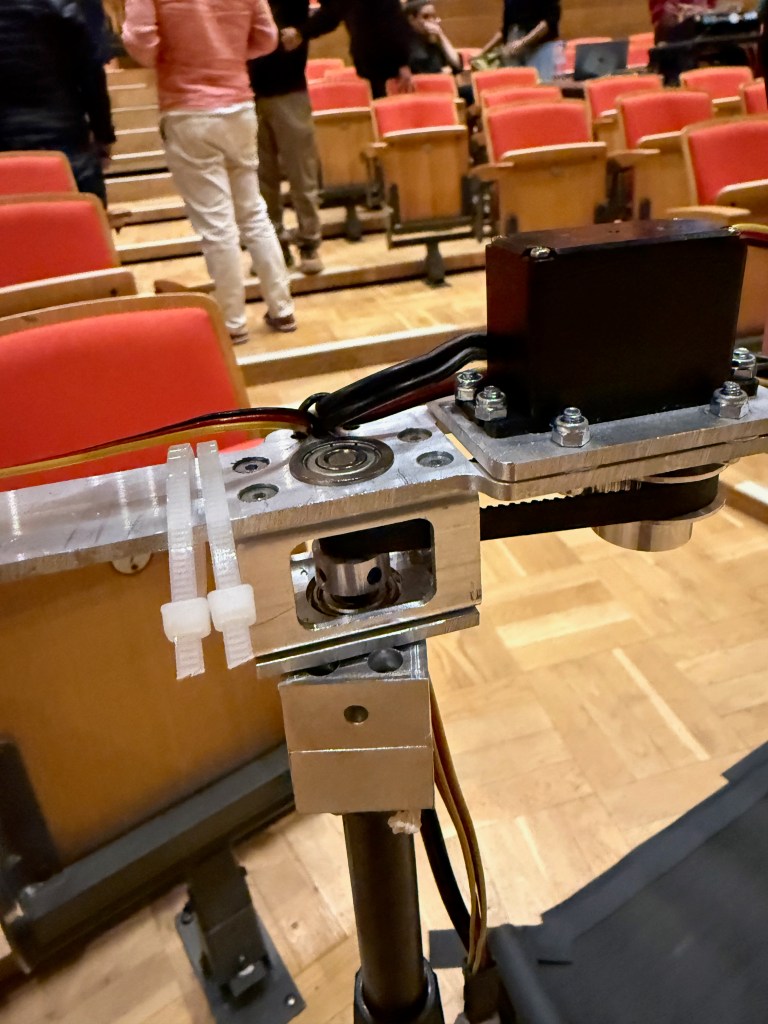
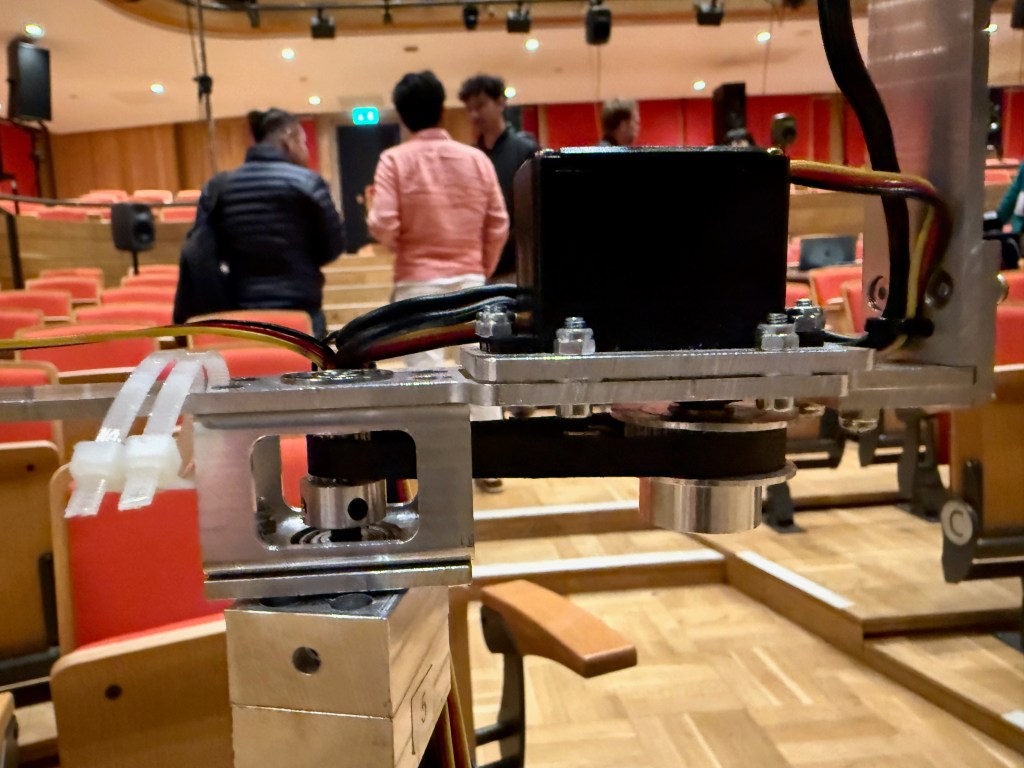
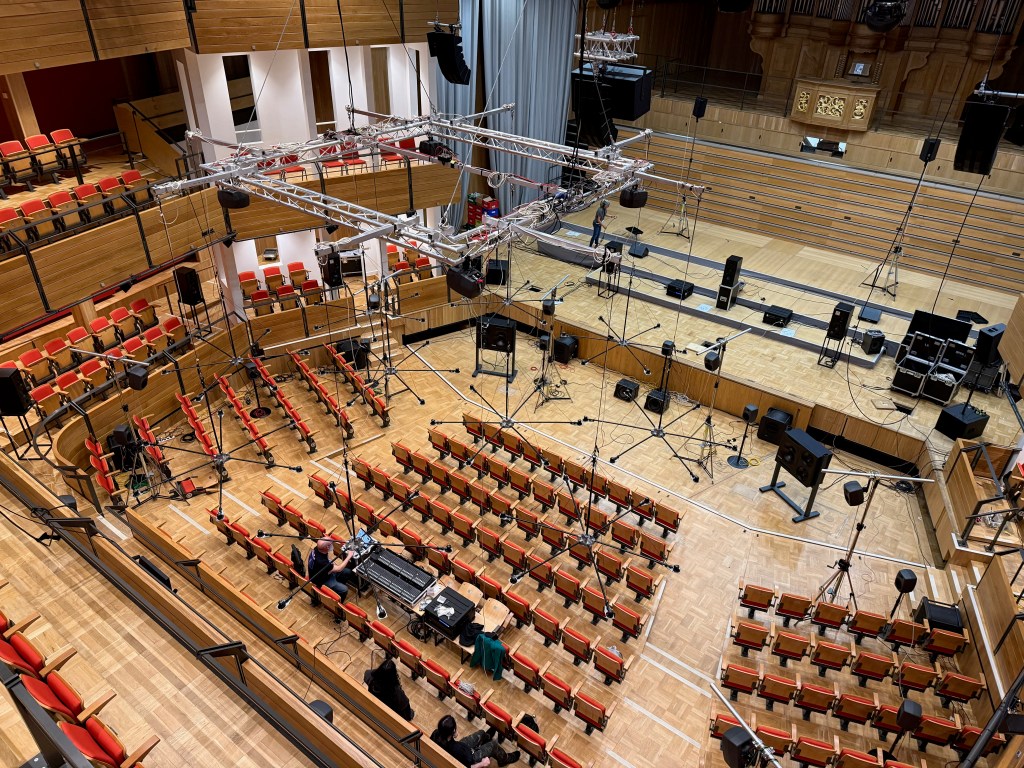
I had been aware like many, of moving loudspeakers through the ‘Leslie Speaker’ that gives a tremolo effect to Organs. However, The Aggregate speaker gave a controlled movement that seemed to organically come from the sound material itself, rather than an effect imposed on the sound. This experience was wonderfully compelling. The sound from the moving loudspeakers reflected off the walls and moved like a sonic shadow around the hall. The sound material was carefully chosen for its ability to convincingly move and emanate from the loudspeaker. In addition, the improvised material from the fixed PA, gave a supporting ‘frame’ in which this movement took place.
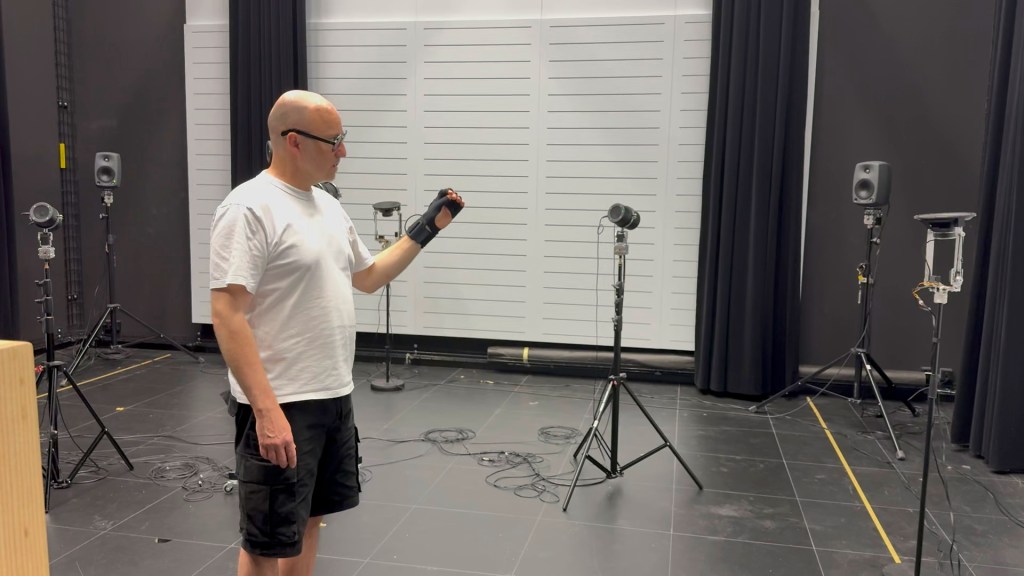
The movements of the Aggregate speakers were controlled by Midi CCs from Reaper and tightly linked to the audio. After the concert we discussed the possibility using Mimu Gloves to control the movement ‘live’ and what this could potentially add to the performance. Annie remarked that this would be a quicker way to try out movements that were previously drawn as automation in Reaper.
Annie and I applied for a residency to work with the ICST who originally created the moving loudspeakers. We initially didn’t get that opportunity to work at the ICST so in a moment of hubris I thought ‘I could build my own’…
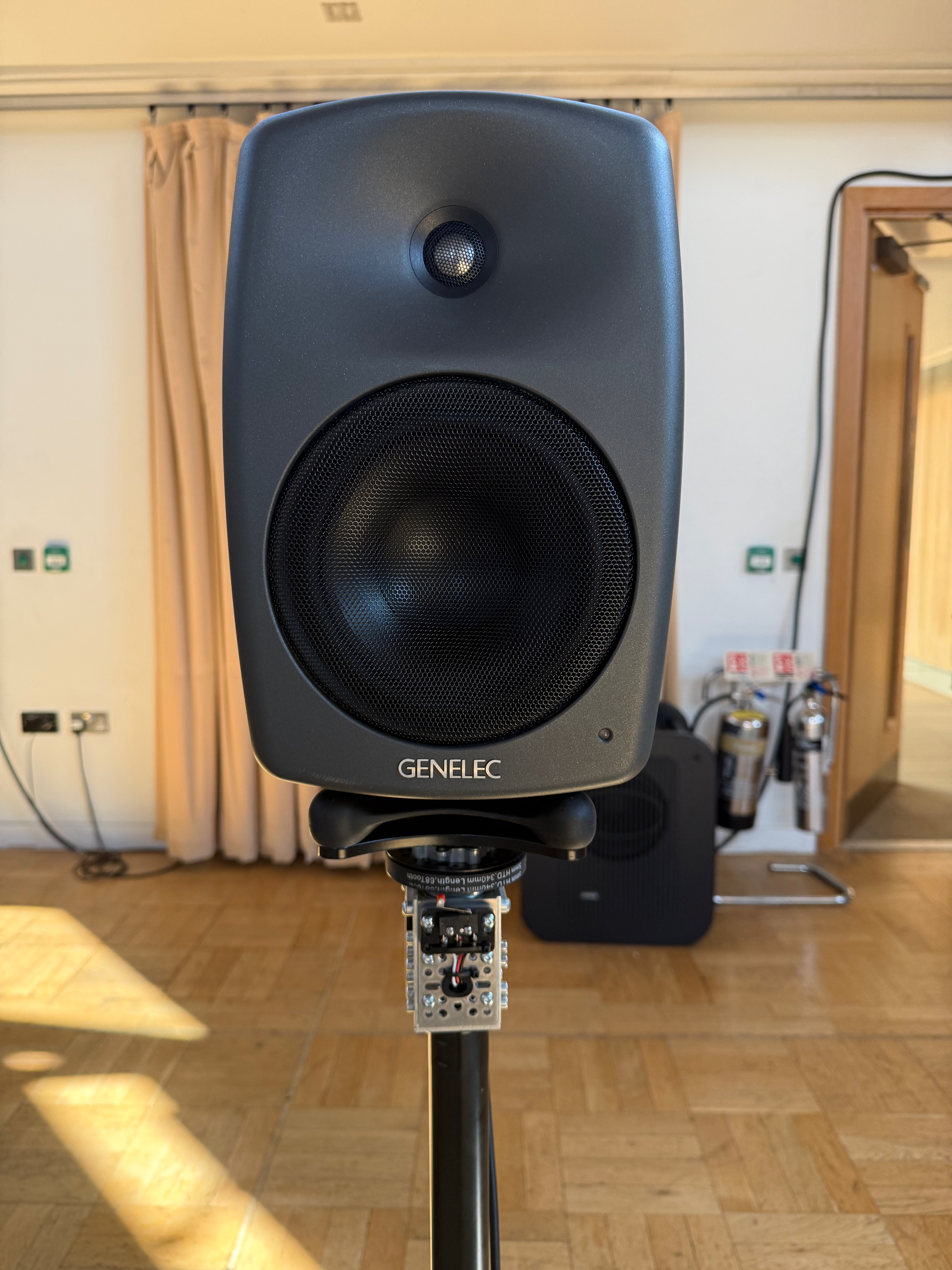
DIY Moving Loudspeakers: Moving Genelecs
In my work as technician at BEAST, we often turn loudspeakers to face the wall for a distance / diffuse effect. I wondered would it be possible to remotely move a Genelec (8030/40) loudspeaker?
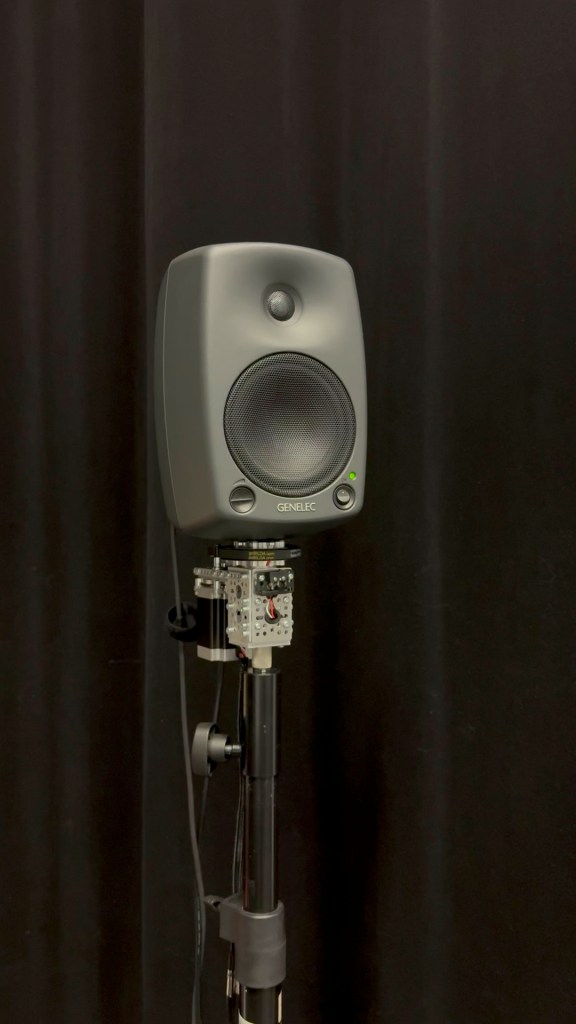
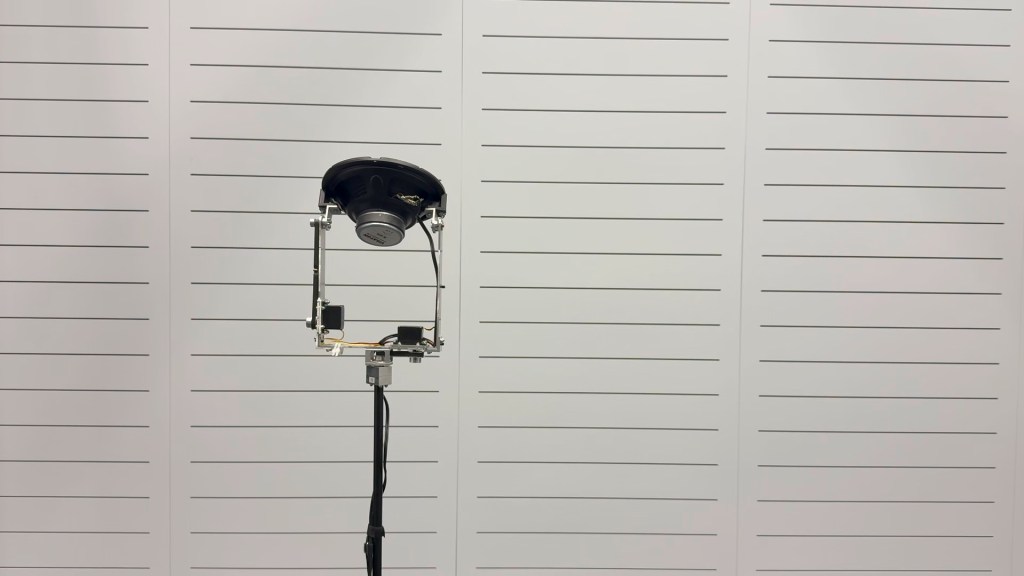
After a call with a friend who does robotic sculpture, he suggested I try stepper motors because they were quiet and could handle the weight of the loudspeaker. I found an OSC to stepper motor control board the Ponoor Step 400 online. This has 4 x stepper motor drivers all configurable over OSC from an included Max/MSP patch. I bought one Nema 23 stepper motor and tested it with the board. After a lot of trial, error and parts from GoBilda, I was able to build a working prototype that could safely support the weight of the Genelec 8040. My first version used a cog mechanism to move the speaker and improve the torque, but this was a little noisy, so I switched to a belt system which worked well and was extremely quiet. Once I was happy with the prototype, I build 3 more so I could use a quad configuration.
In Annie’s original performance the fixed static PA was used as a ‘frame’ for the Aggregate loudspeaker, I was keen to see what would happen if that frame could move and achieve some of the distance effects that we use in sound diffusion. This would serve a different purpose to the Aggregate loudspeakers in that it would be more about position rather than motion.
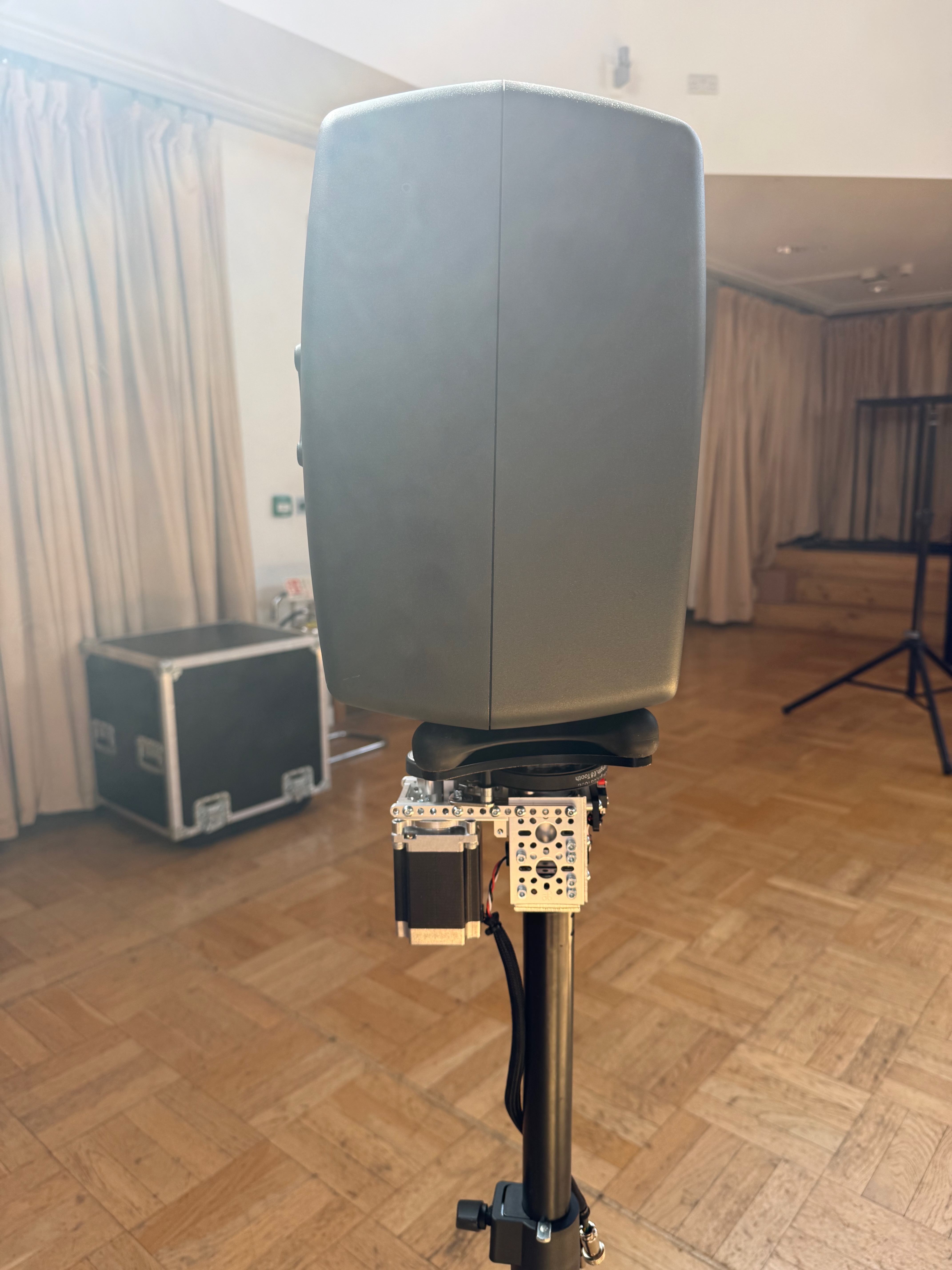
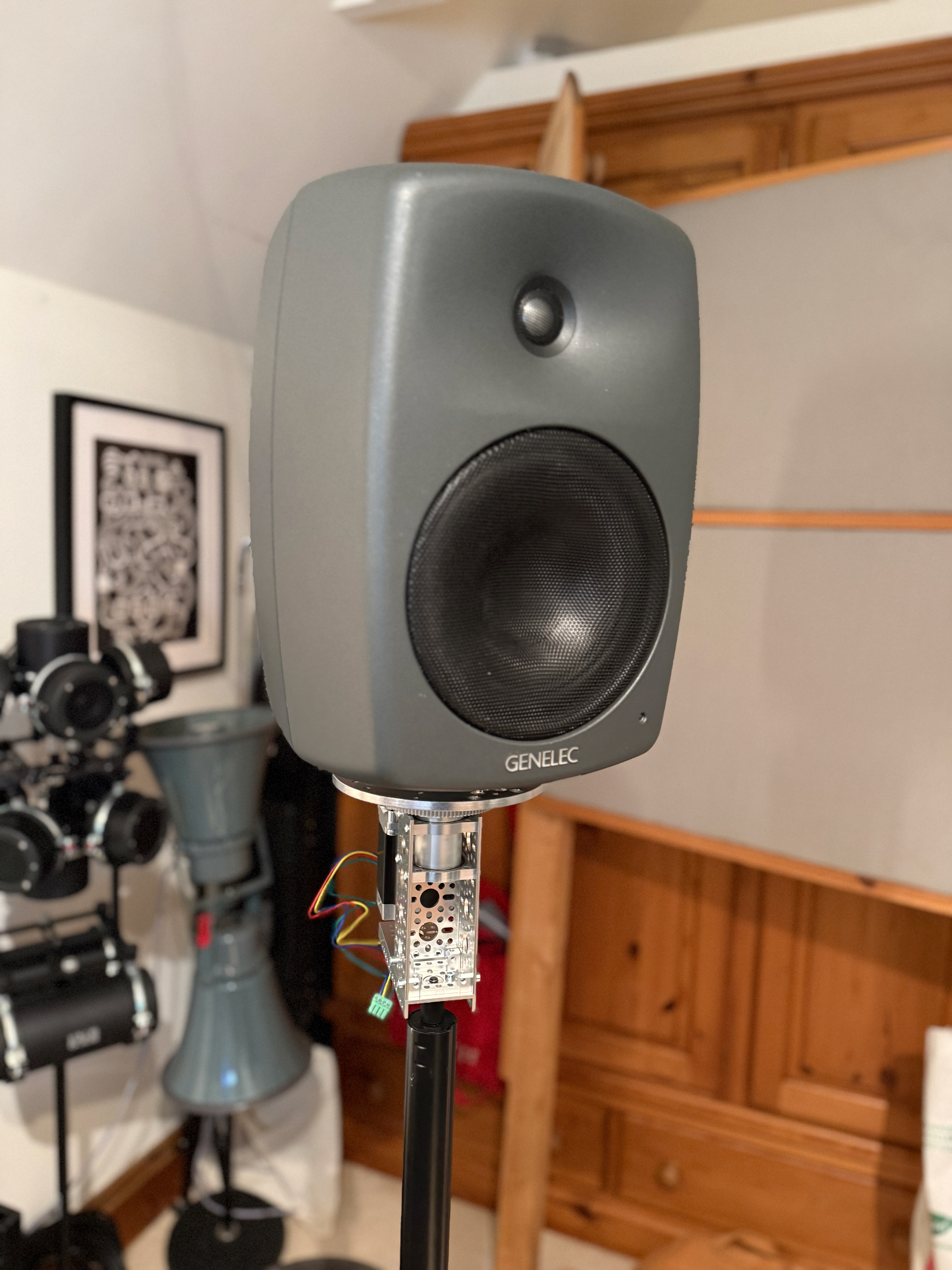
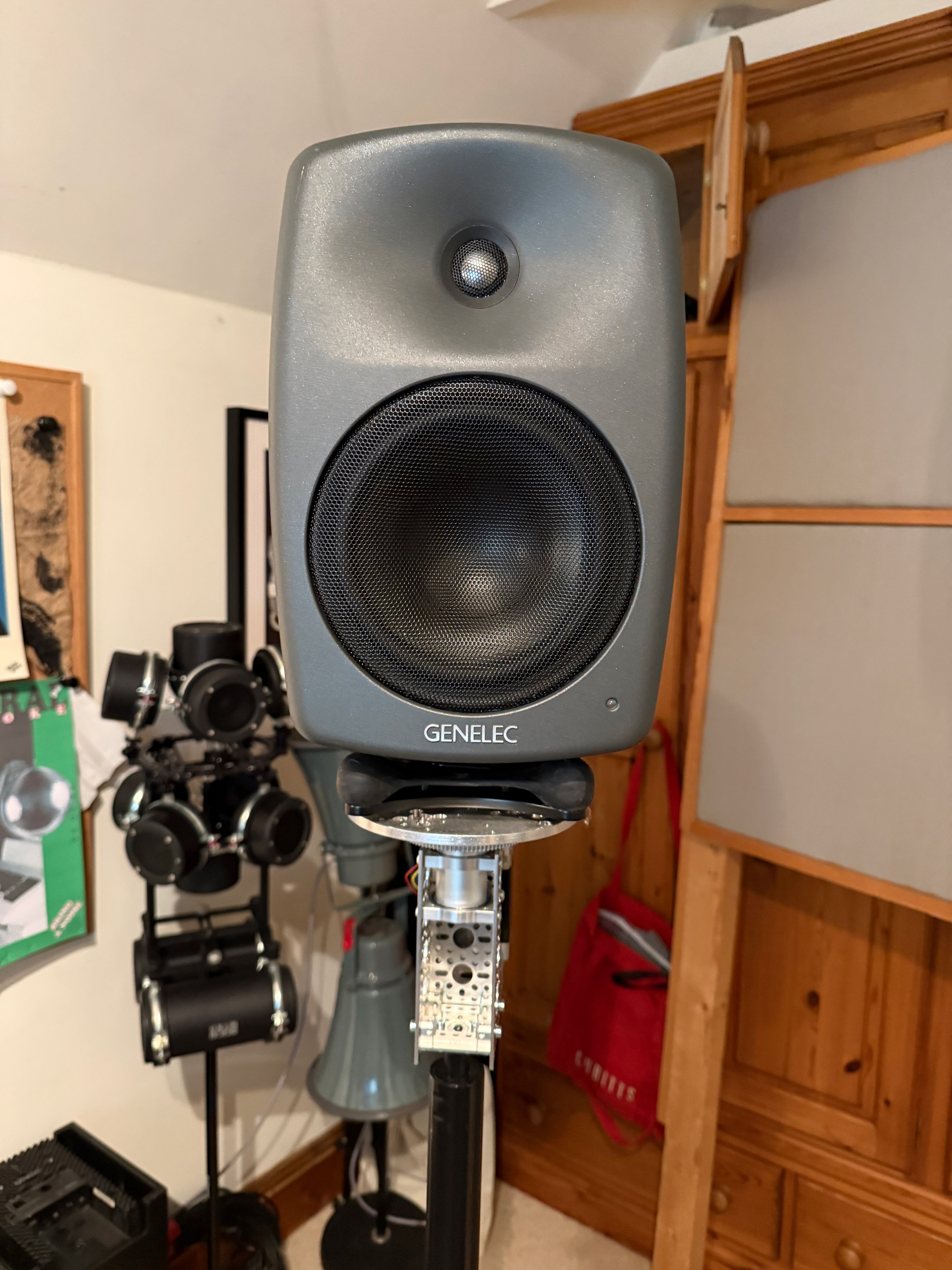
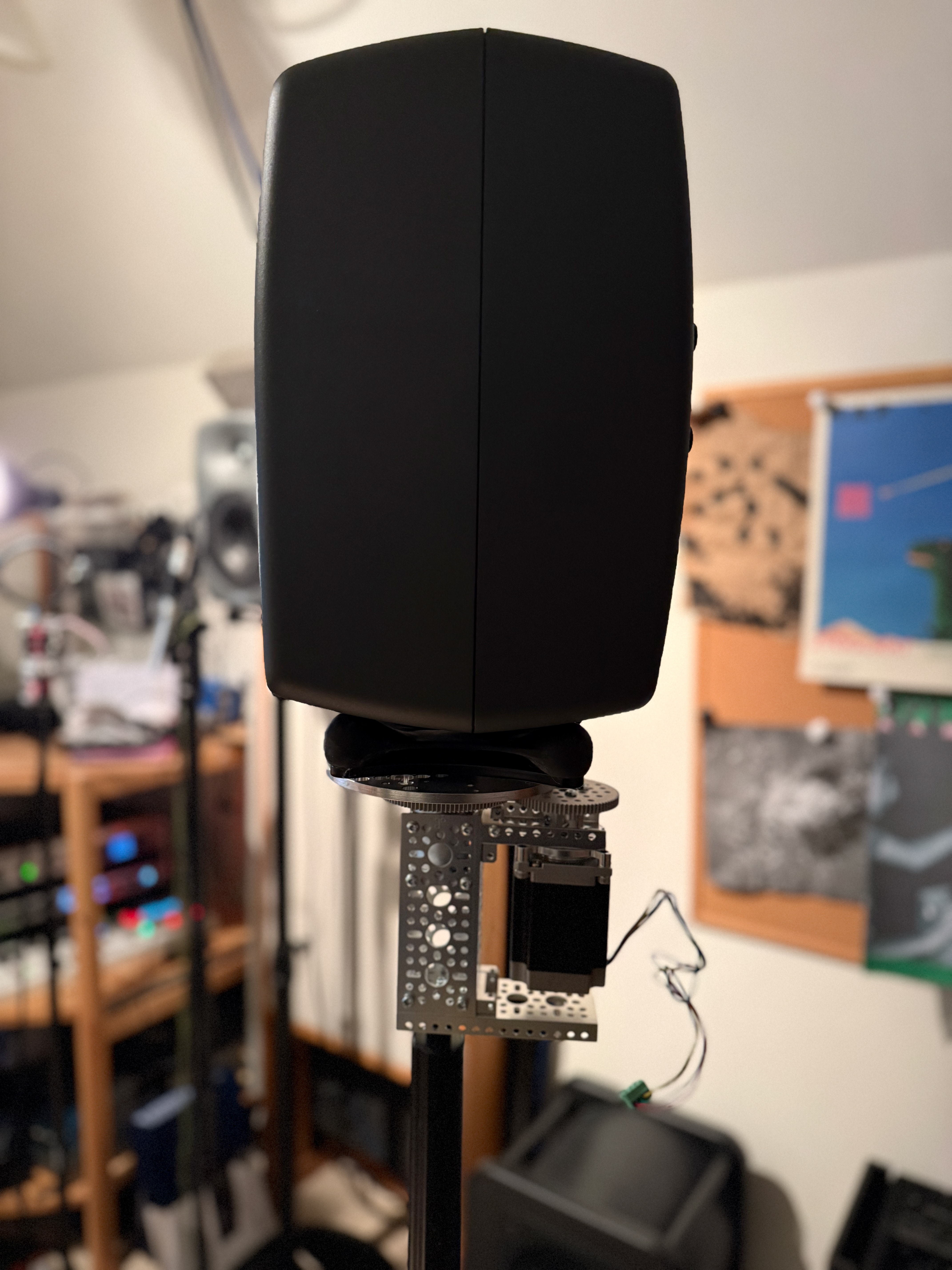
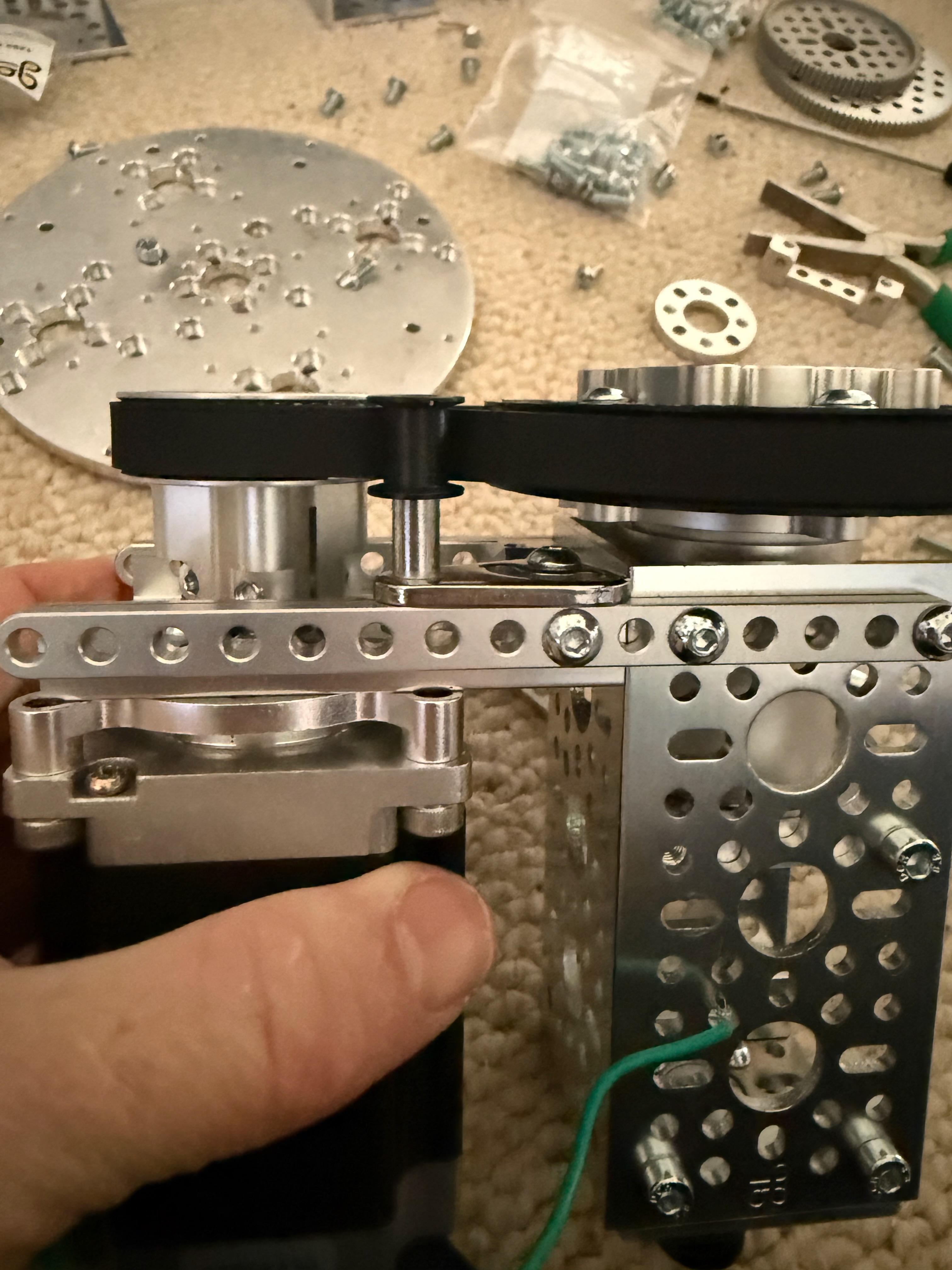
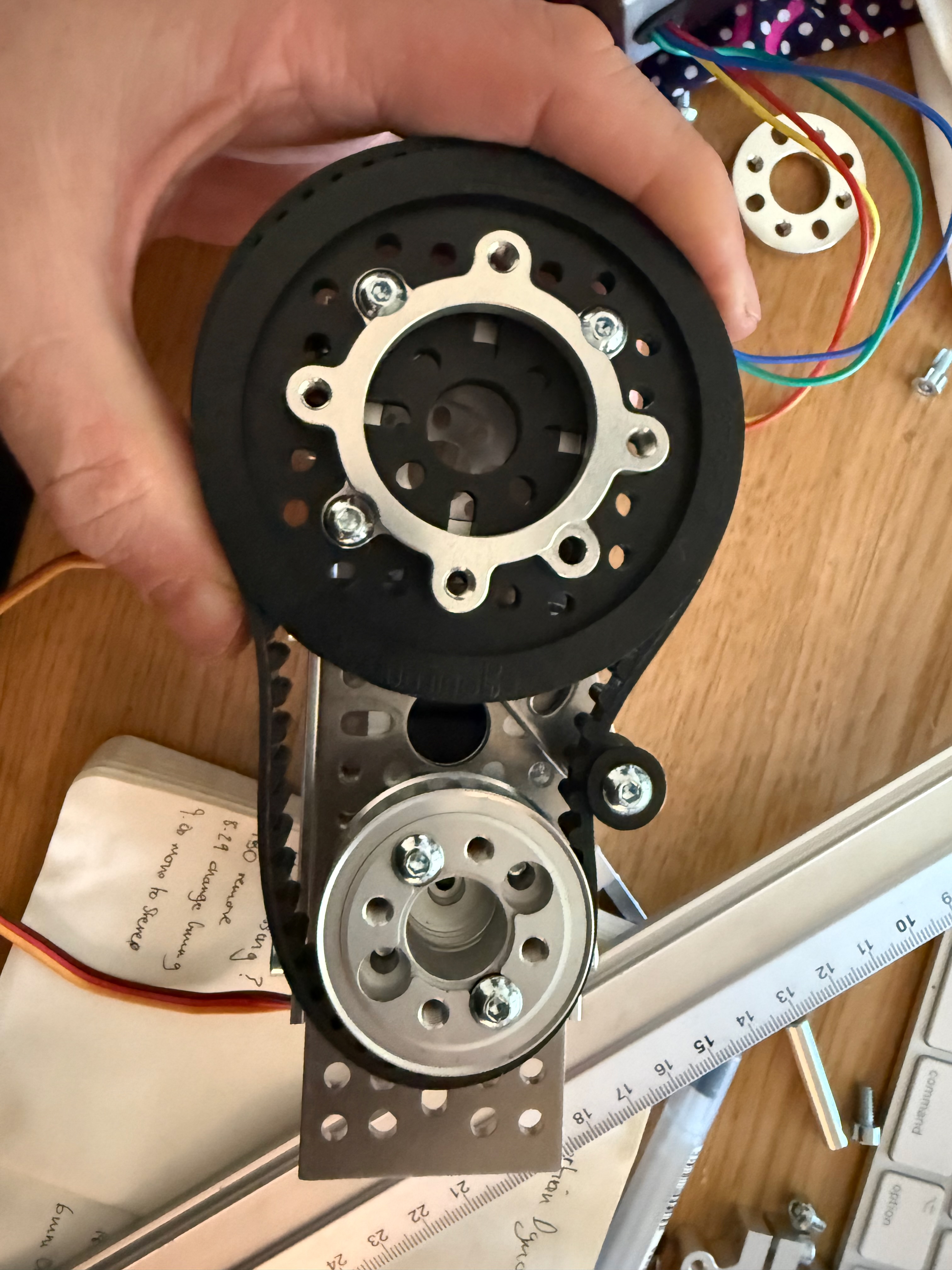
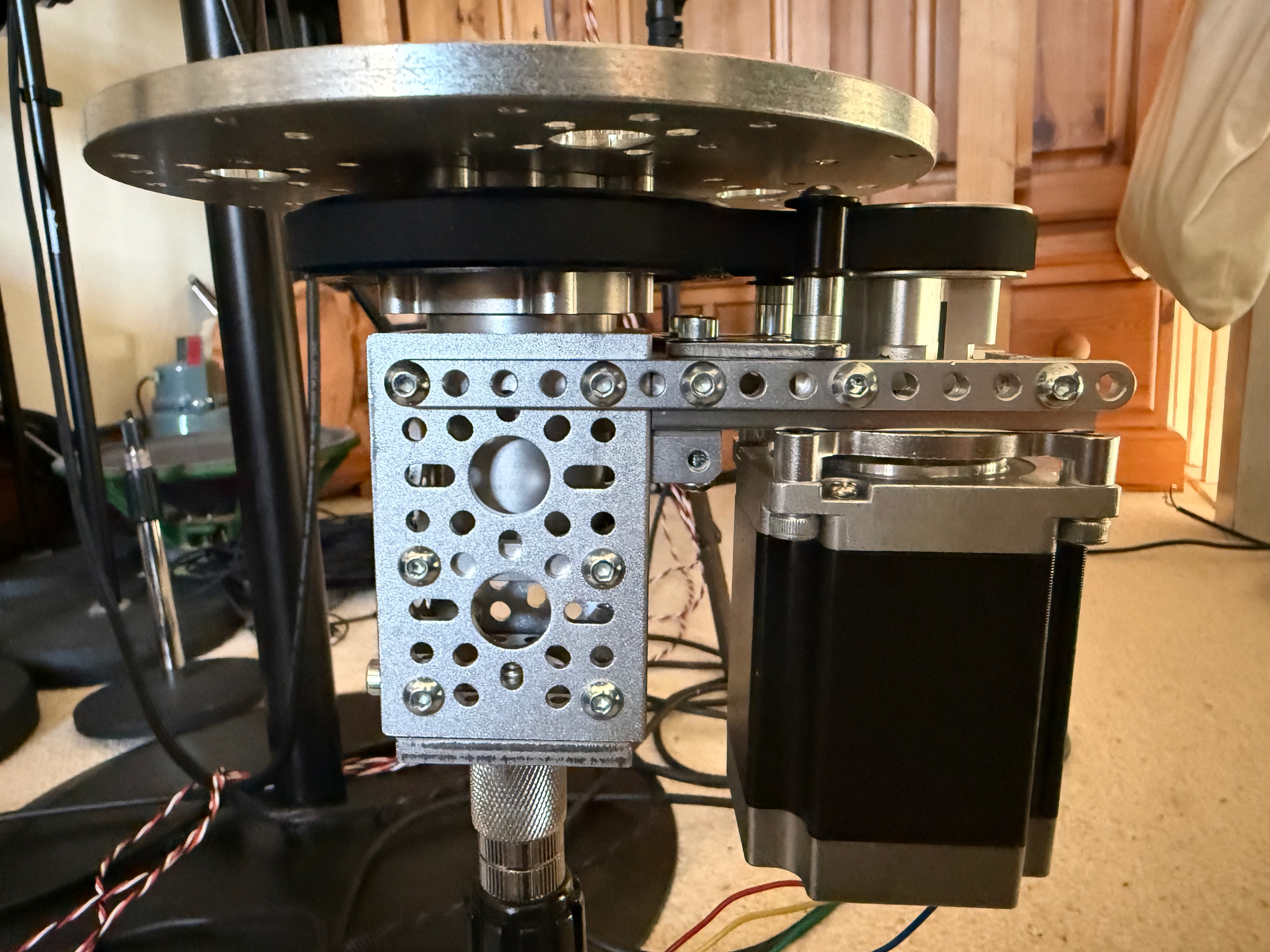
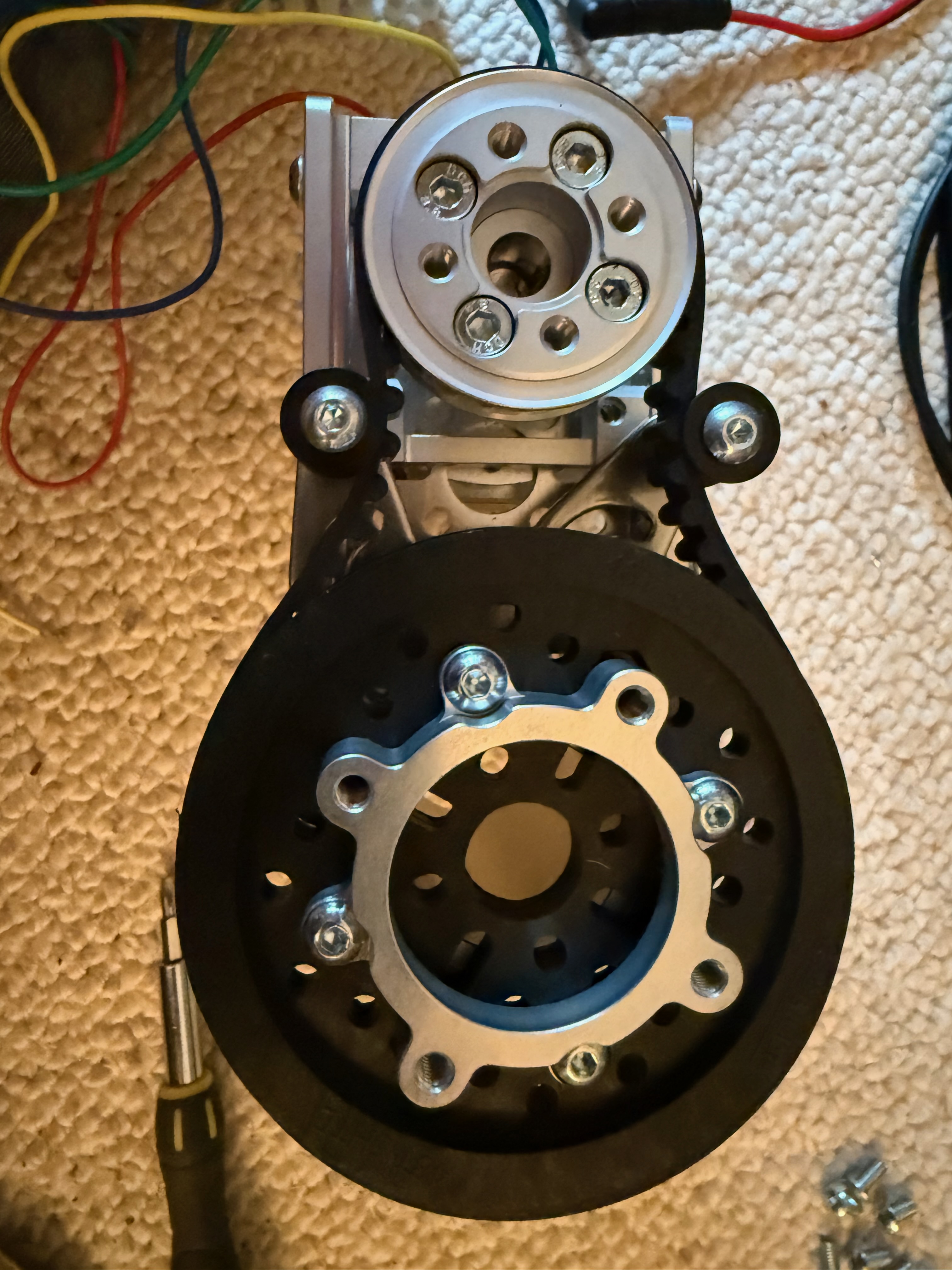
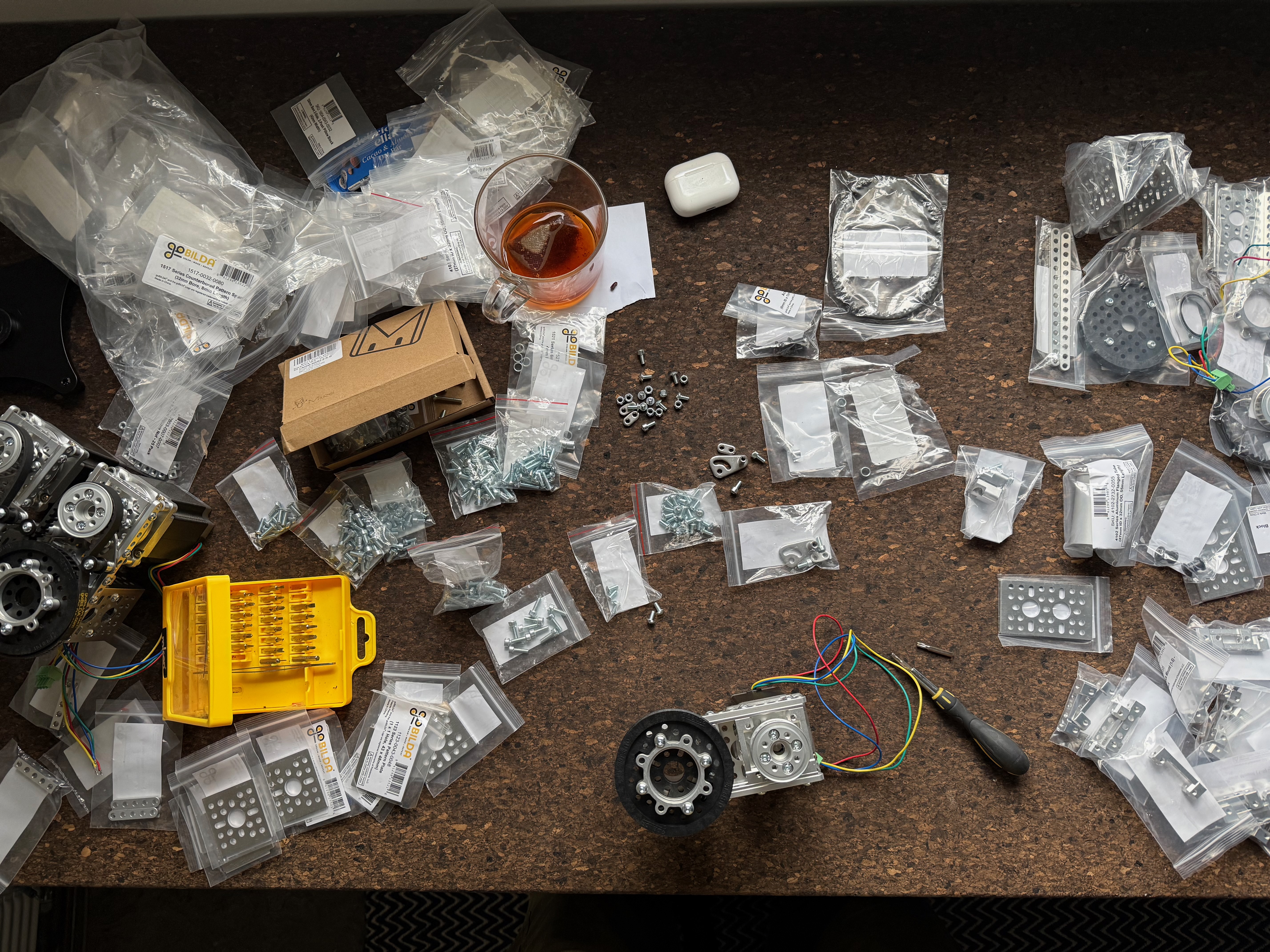
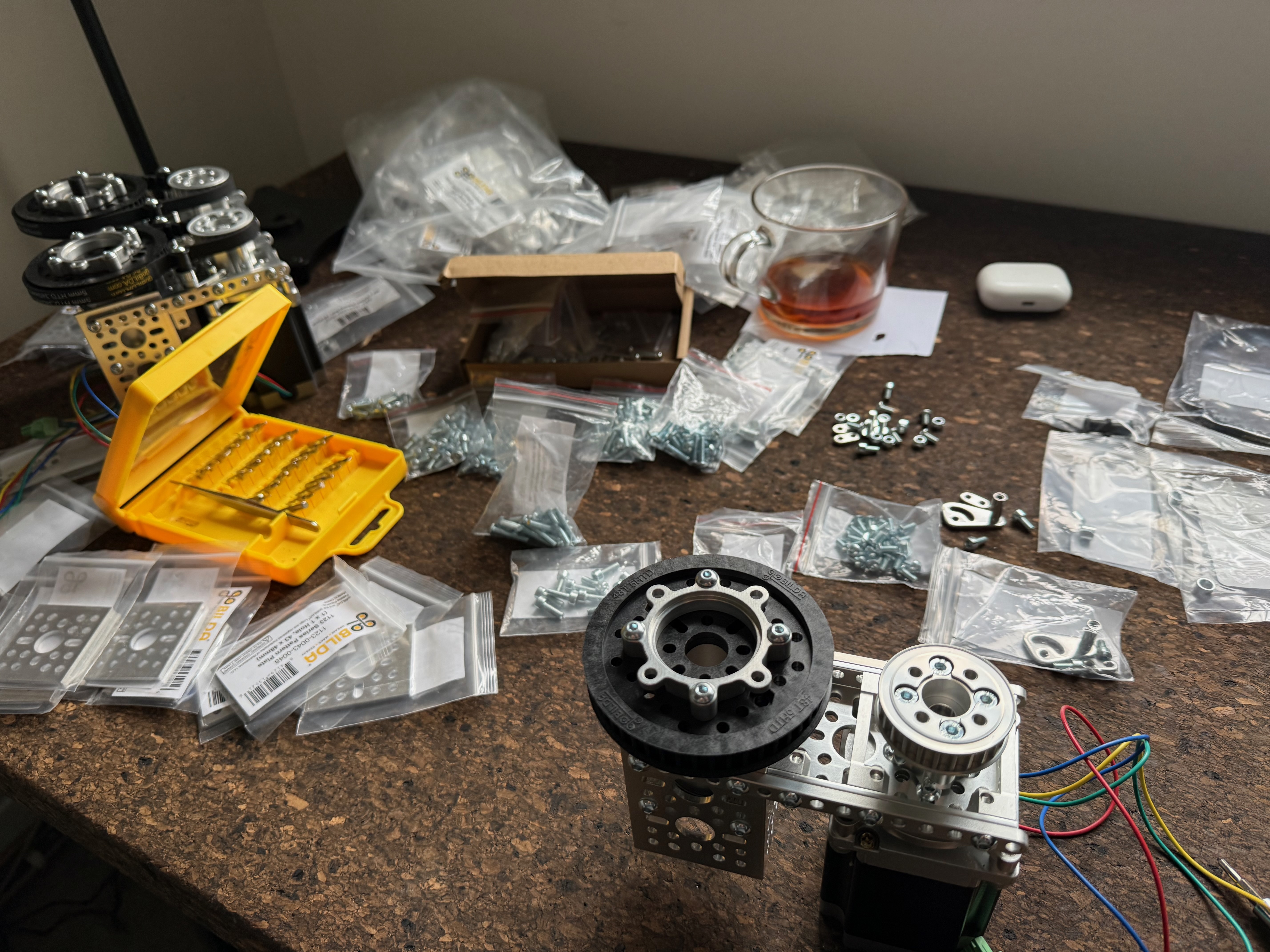
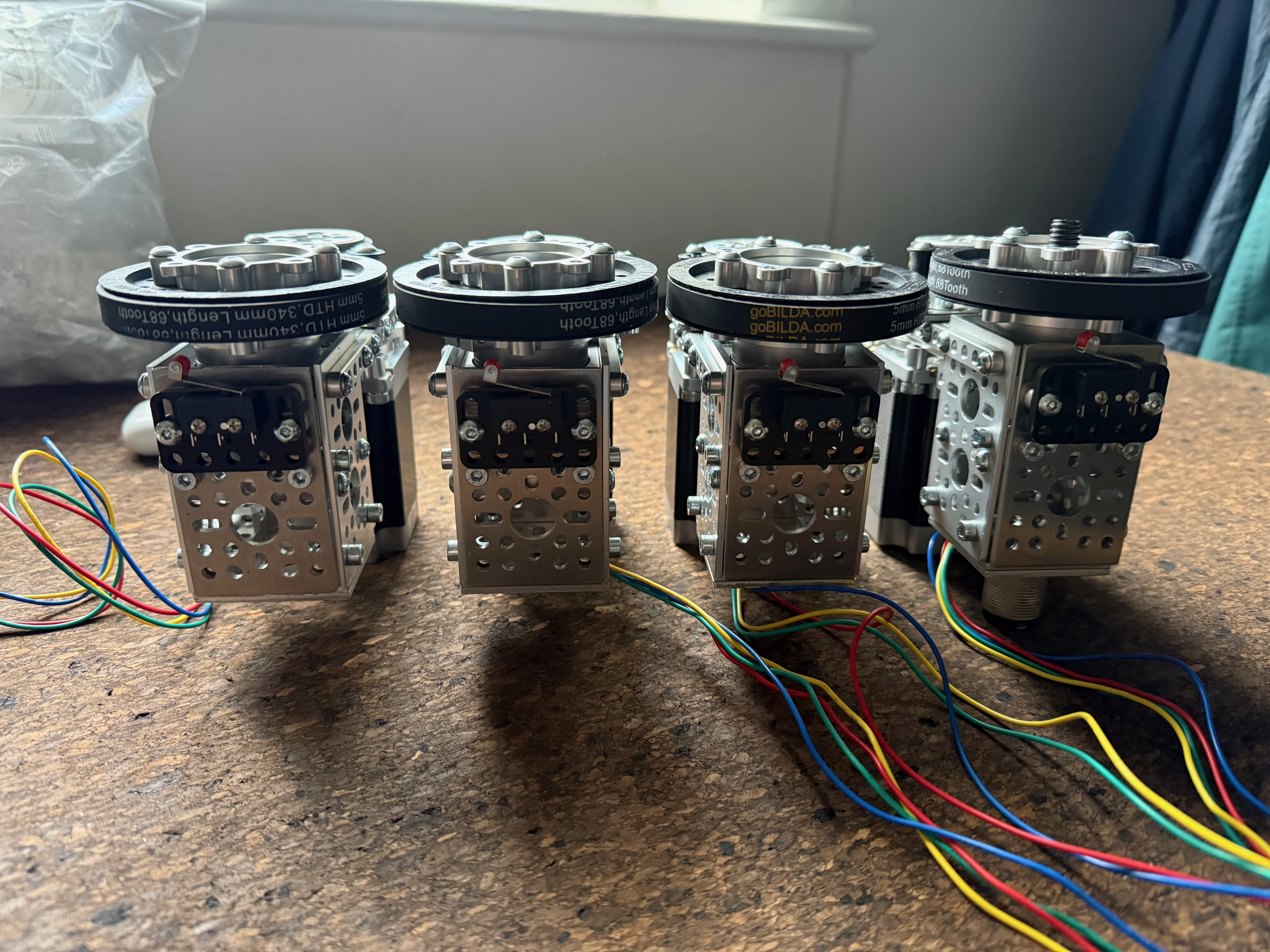
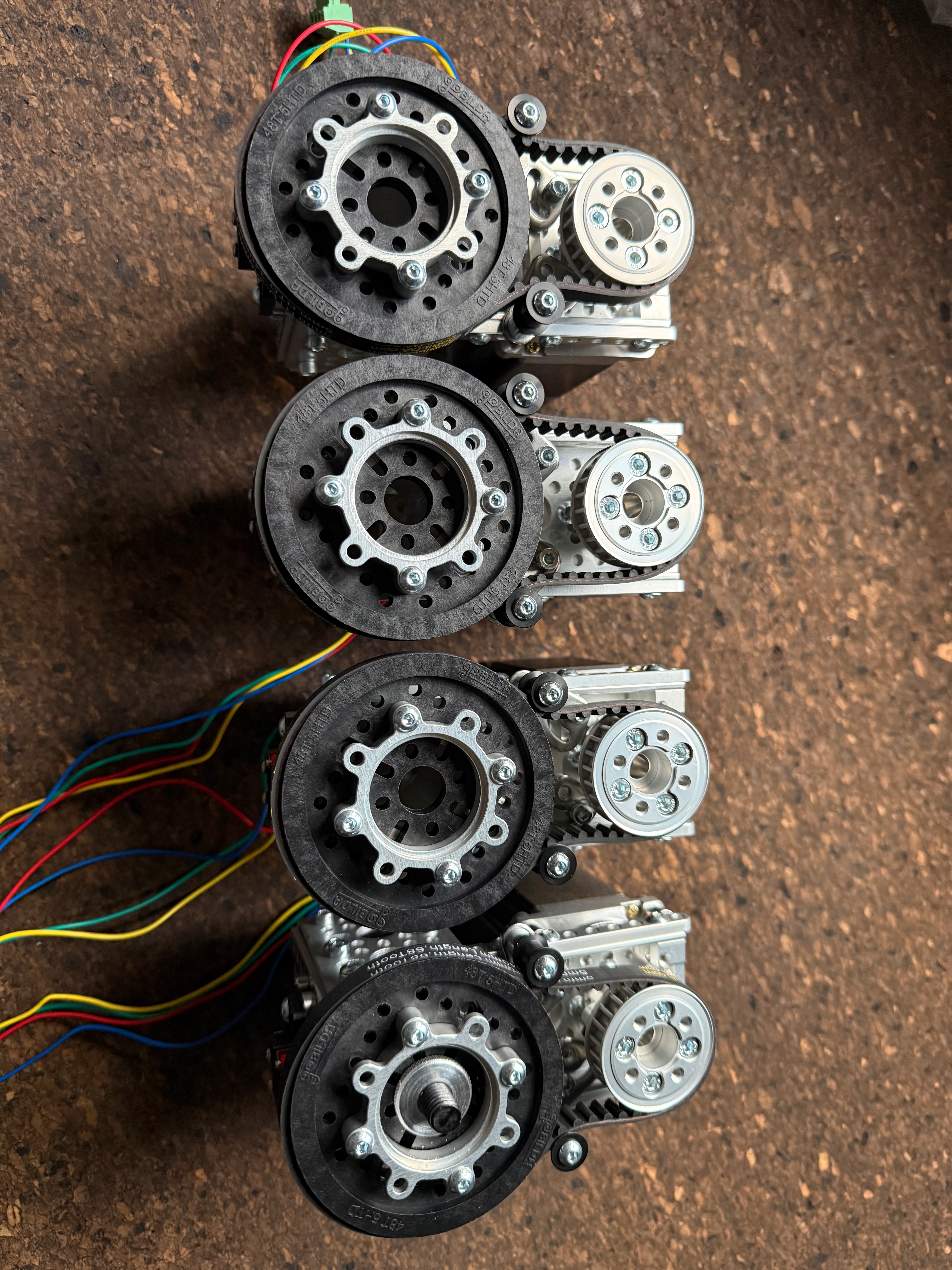
Residency- Moving loudspeakers
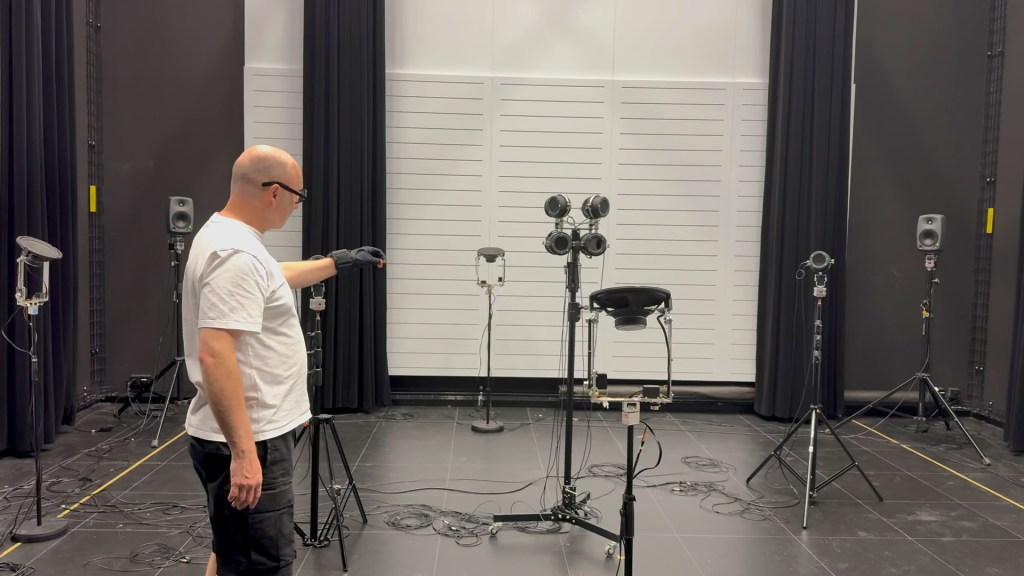
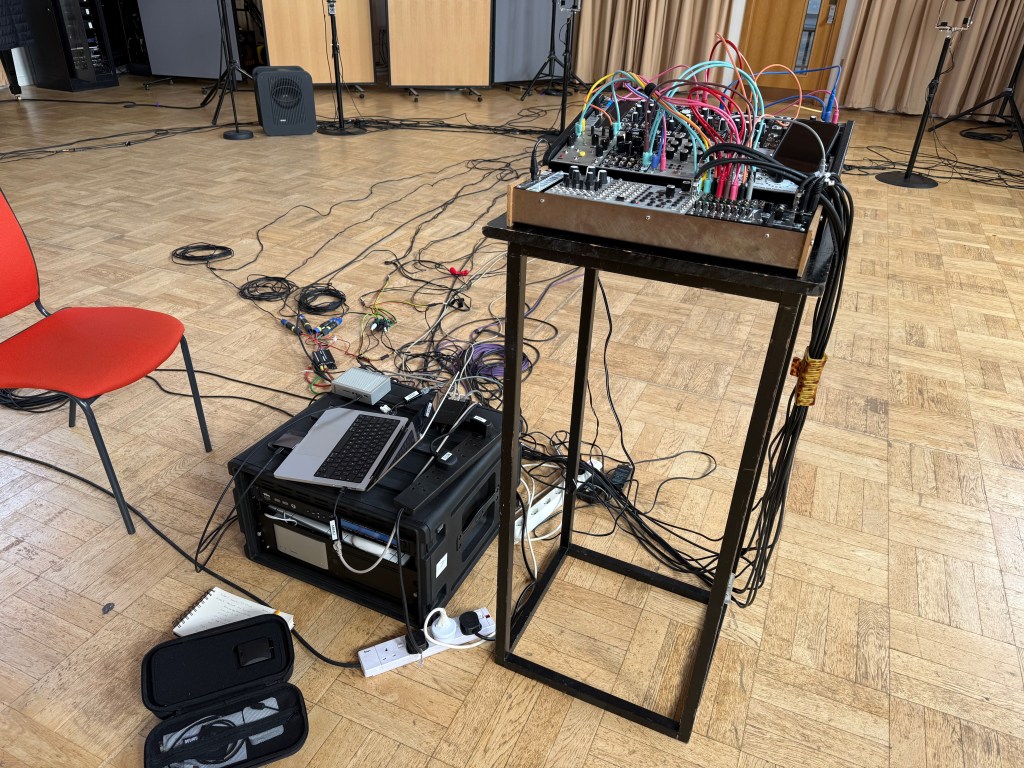
As mentioned, we did not initially get the residency we went for but, undeterred, Annie successfully applied for funding from ProHelvetia to create new work, at the ICST and BEAST facilities. We had two weeks in each venue to explore working with moving loudspeakers. Annie’s focus was to create a piece using sounds from the ICST’s Serge modular system in combination with her own Eurorack system. My focus was to spatialise that work using the Aggregate Loudspeakers and the new moving Genelec loudspeaker systems I had built controlled live, with the Mimu Gloves .
ICST Phase 1
While Annie set to work recording and working with the Serge, my time in the first residency was spent ironing out technical gremlins and Max patching. Although I had prepared, I underestimated how much was still required to develop a working system.
Specific issues were:
- Trying and failing to get a homing system working for the Genelec motor speakers (both hardware and software issues, turns out I didn’t need it anyway!!)
- Exploring machine listening to create dynamic audio routing (CPU killer and didn’t fit the material)
- Addressing the Step 400 and stepper motors in ‘Servo Mode’ (Where OSC is constantly updating, this led lost data packets and the Genelecs not returning to where they started causing drift)
- Combining control of audio routing and loudspeaker position at the same time (this required a significant re write of the Max Patch to link the necessary parameters)
What worked well was the midi control of some moving Minirig loudspeakers I had built but decided not to use. The Yost Labs board (Midi servo board) worked so well we used it for the Aggregate loudspeakers after this replacing the, ICST built, Arduino control board. The Mimu Gloves worked flawlessly (until just before the performance) and were easy to program.
That said we were able to give a sharing of work in progress to the generous staff at ICST. I was able to use the Mimu Gloves to successfully pan sound material and then move the Aggregate loudspeakers. Which showed a proof of concept that loudspeaker movement could be controlled in real-time in a performative way.
BEAST Phase 2
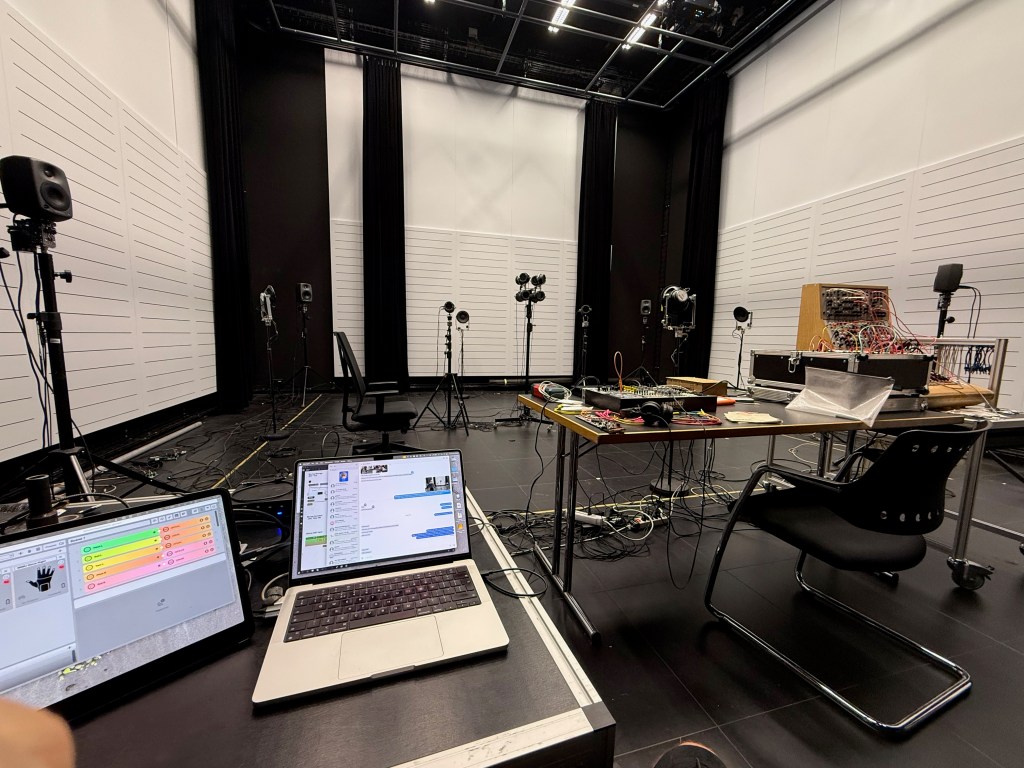
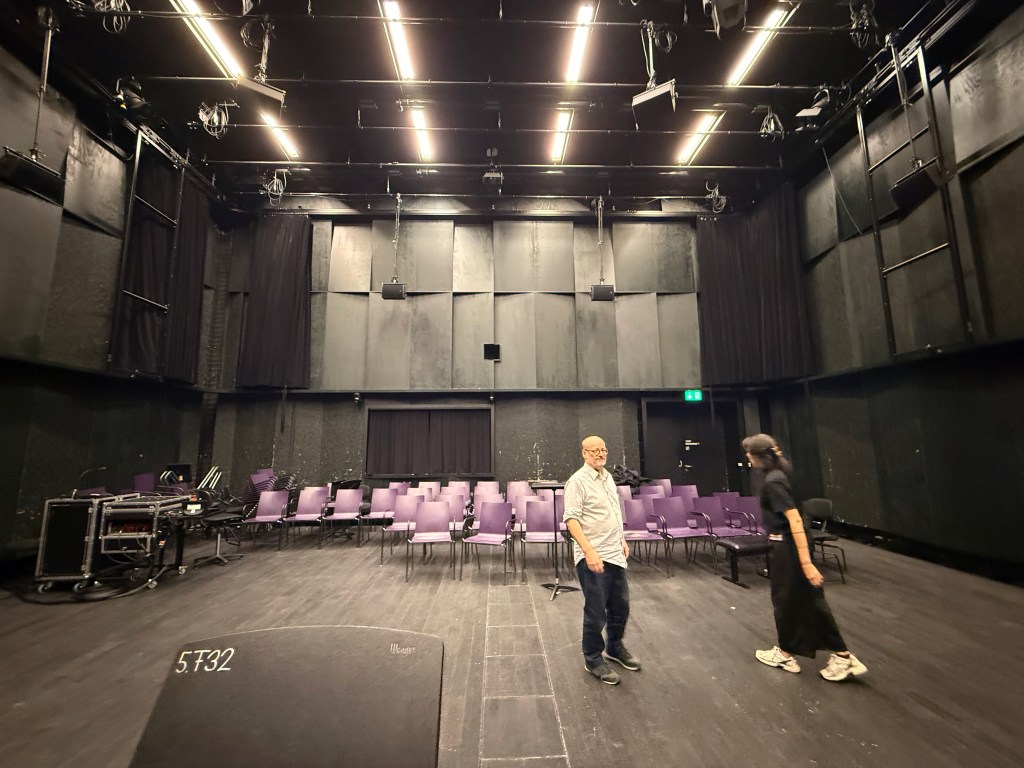
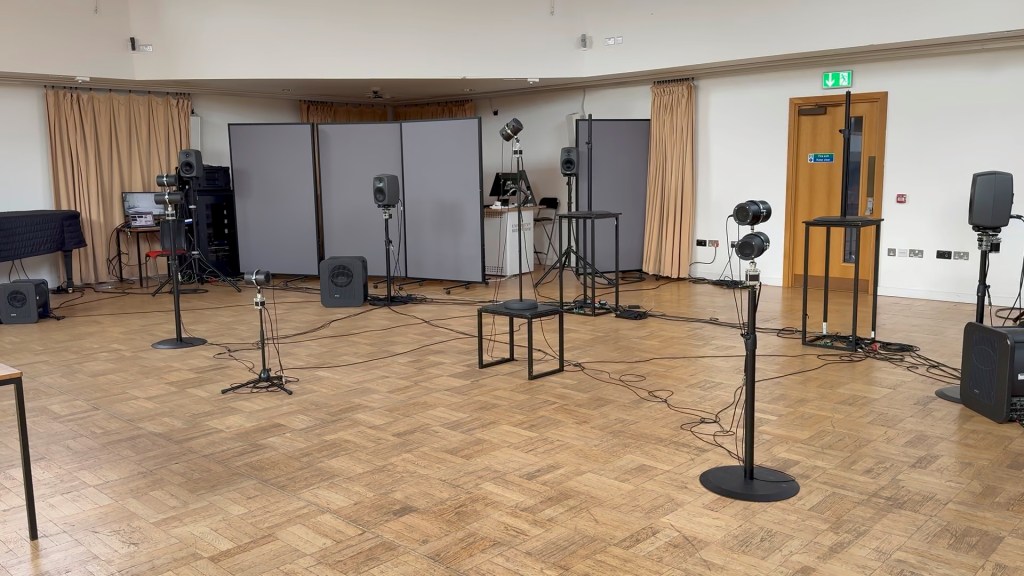
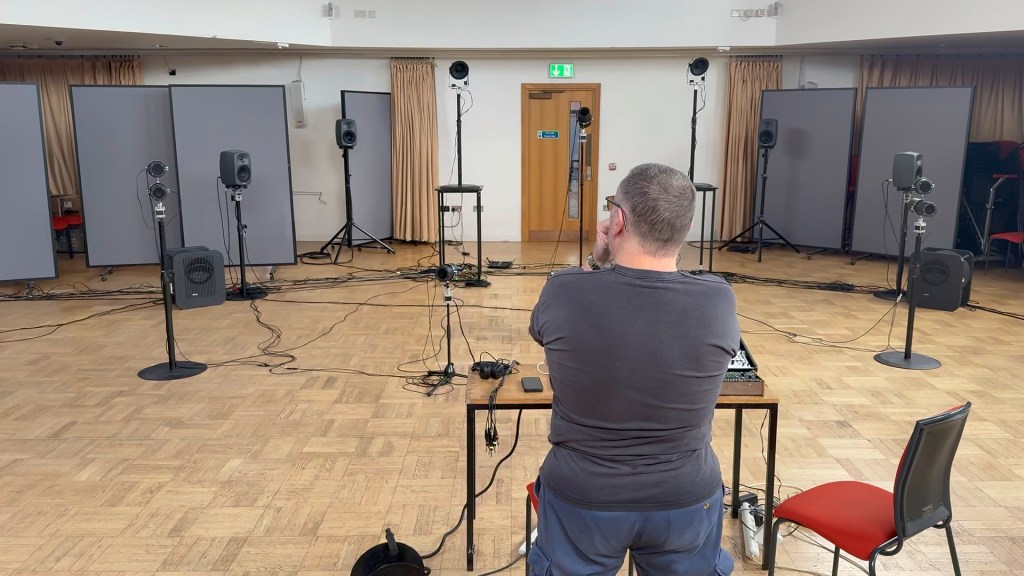
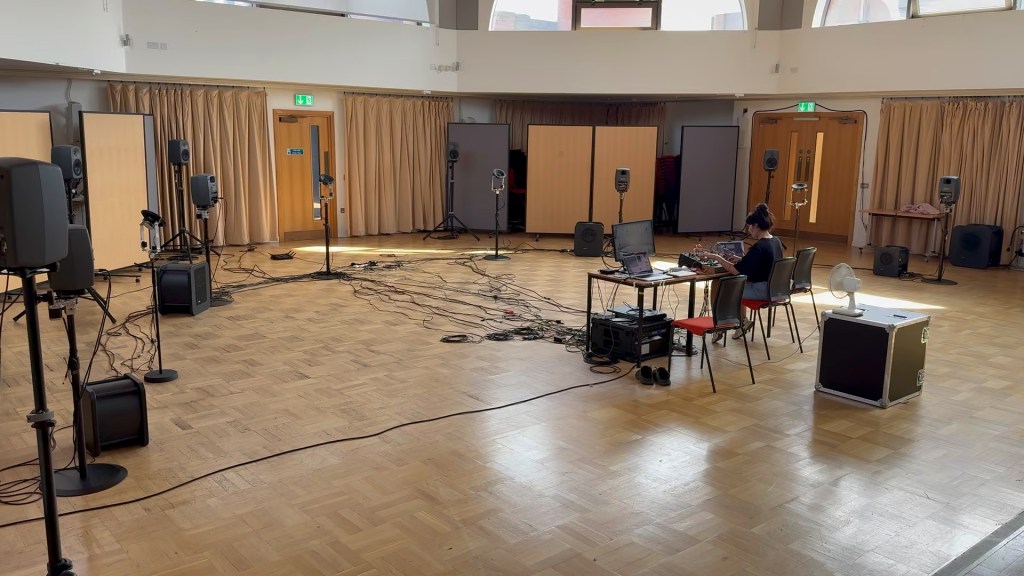
Between Phase 1 and 2 I had spent several weeks designing, building and reconfiguring an additional four Minirig based loudspeakers systems. On the first day I had everything working and set up, and I was showing Annie, Peter Färber and Jonty Harrison what I had been doing. Jonty remarked that it was a ‘lot of work’…it was at that moment, I realised I had overcomplicated the whole thing! So, I stripped back the system to just the 4x Genelec moving loudspeaker the 4 x aggregate loudspeakers and the BEAST Dome, in built, loudspeaker system. This was the most constructive feedback I had received, and the rest of the residency was spent focussed on building the piece and less on tech solving.
Things that we fixed were:
- Genelec system was addressed with OSC commands not real-time OSC streams (this led to repeatable positioning of the speaker)
- The Max Patch was refined to allow quick routing and position control. Overcoming processor issues and audio glitches by disabling unused processors as the piece progressed
- Made changes to the audio routing from the Eurorack to the audio interface. This enabled flexible routing of signals to different loudspeaker configurations.
- Implemented some reverb and spectral diffusion effects
- Made section by section presets that created a spatial and narrative shape to the performance
- Developed some movements (in addition to positions) for the Genelec loudspeakers for specific sections of the work
- Used a stronger Wi-Fi Router for Mimu Gloves (which worked very well)
We also did a final sharing of the full work with staff, friends and students on the penultimate day of the residency (minus the glove control). The next day I was able to integrate the Mimu glove control and we made some documentation.
Outcomes
What initially had drawn me to moving loudspeakers was the how they could create spatial motion in a way that fixed arrays of loudspeakers did not. One issue with Ambisonics is that often the sound sticks to the Holosphere or the periphery of the loudspeaker system. With moving loudspeakers this periphery can be augmented with more intimate/close sonic spatial motion. With the BEAST residency we were able to create and explore layers of spatial architecture. A fixed frame of the ambisonics array, a closer dynamic frame of four positional Genelec loudspeakers and an array of the more directional Aggregate loudspeakers. These layers were able to give shape, scale, motion and narrative structure to the live performance of electronic sound.
Initially when we discussed the project, my role was to perform the movements of the loudspeakers with the Mimu Gloves. As we progressed it became apparent that me being a focus would distract from the listening experience. I still did not want to be just triggering aspects of the work, sat at a laptop, as in the second sharing. My role will be to stand/sit alongside Annie and control the loudspeaker movements and spatial routing with the Mimu gloves and controllers without recourse to the laptop keyboard and screen. This will hopefully create an sense of improvisational dialogue between sound material and the loudspeaker assemblage.
We have several performances forthcoming and undoubtedly this project will develop as we play each new venue. I am looking forward to seeing how this progresses and I will be sharing these events when they are advertised. Hope you can join us.
Performance System 2024
My performance system consists of 3 main elements, a biosensing muscle control, a granular sound engine and a sound spatialisation system.
Bio Sensing Muscle Control
I use Myo armbands, which sense the electrical activity in the arm muscles using 8 electromyograph sensors. It also track the arms position in 3D space using built in accelerometers and gyroscopes. My left arm is used to find and trigger sounds distributed in a virtual space. The data from the sensors is piped out via Bluetooth to a receiver which is then read by the Myo Max object. The intensity of the tensions in my arm muscles controls the amplitude. When I first tried the patch, it was a wonderful sensation like the sonic sparks were coming out of my arm. It made tangible that my body was a mass of energy as well as flesh and bone. Importantly, it meant that I am not tethered to the laptop I can move around freely and listen when I perform.
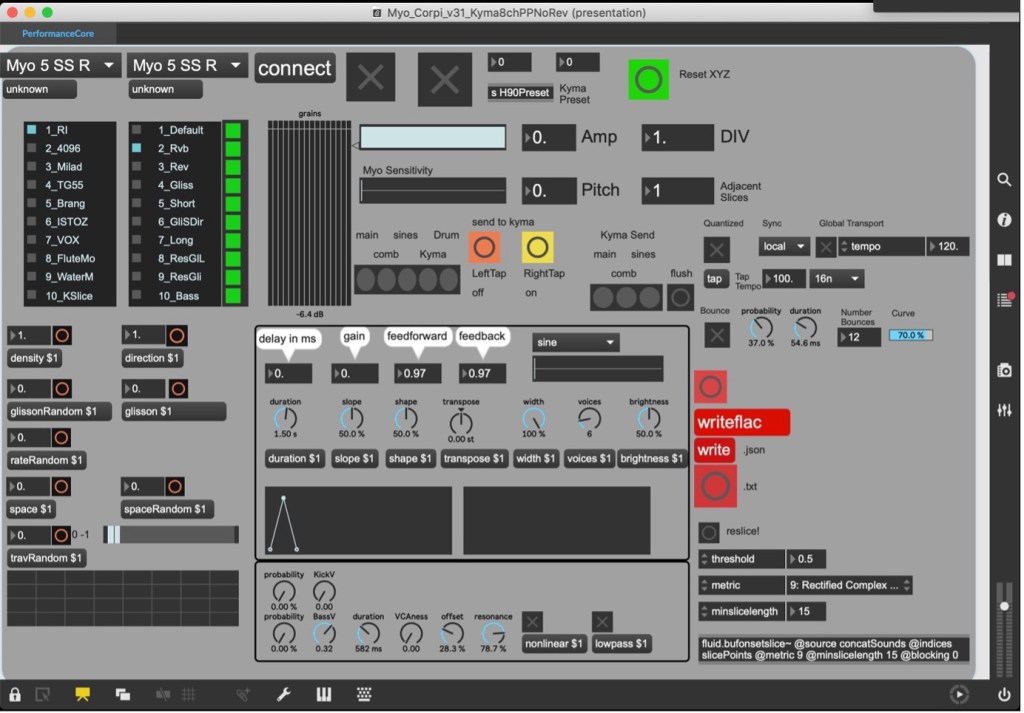
I also use Genki Wave rings to move through my patch presets and banks of sounds and to send sound to Kyma.
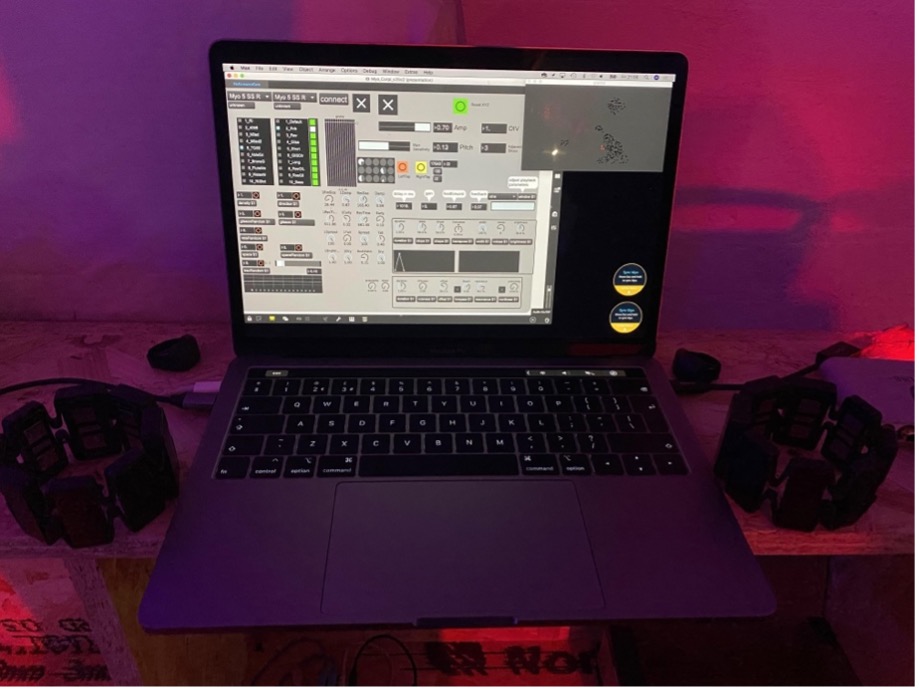
For an understanding of what the Myo’s can do here is the video that inspired me to start down the path during lockdown
Sound Engine
Max –
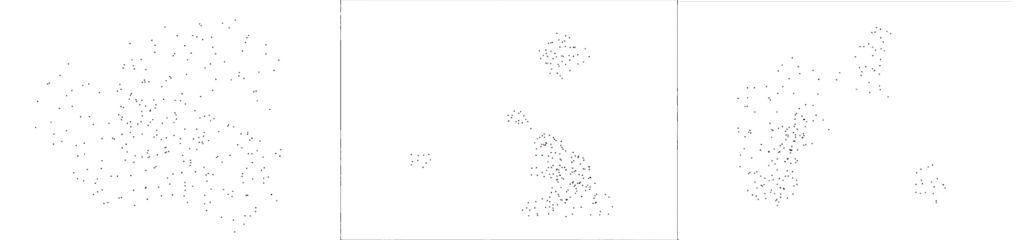
The 8 channels of data are analysed for spikes in electrical activity which then trigger the grains in the granular synthesis engine which is based on the ‘Grainflow’ object. This has extensive audio rate controls for pitch, grain envelope, playback speed. All the source sounds are analysed using open-source machine learning tools (FluComa). This creates a corpus (a sound file and associated data set) which is used to spatially arrange the sound grains in a 3D cloud (see 2d pics below). This too was derived from an original patch on the FluComa forum by Timo Hoogland. The Myo Armbands allow me to navigate the cloud and to play it using the 8 channels of muscle tension. The corpus forms the pallet through which I ‘wayfind’ / improvise through as I am not totally sure where the sounds are located. I designed the patch this way as it adds a performative interest for me and the audience.
I have some additional ‘sine cloud’ and resonator effects (from DataKnot) also in the patch to allow me to break up the staccato nature of the grains and add some longer tones.
https://www.christopherpoovey.com/writing.html
https://www.flucoma.org/https://www.timohoogland.com/category/maxmsp/page/3/
Kyma
My main intention with the set up was to play with others and I have been lucky enough to play with some great people. But after a few less that satisfactory performances I started looking to Kyma to provide some counterpoint and interaction. With the ability to send sound to Kyma using the Host Audio feature of the new Pacamara I was able to integrate Kyma into my existing system effortlessly. I send multi-channel sound from Max to Kyma and back to Max for routing to the audio interface and out to my Eventide H90 (for more fairy dust). I am currently using an amazing delay patch developed by Alan Jackson and workshopped on the Kyma Kata. This patch allows the sound to be injected into different taps along a delay line, allowing different delay lengths without pitch changes. I use it for, call and response, drone beds and looping, it is super versatile and sounds fantastic especially in quad and 8 channel!

